HOME RELEASES ARTISTS BLOG / ATC SHOP SUBSCRIBE SUBMIT MUSIC ABOUT
Home Blog Page 9

From Indie Artists To Global Sensations, Visualizers Have Become The New Norm

0
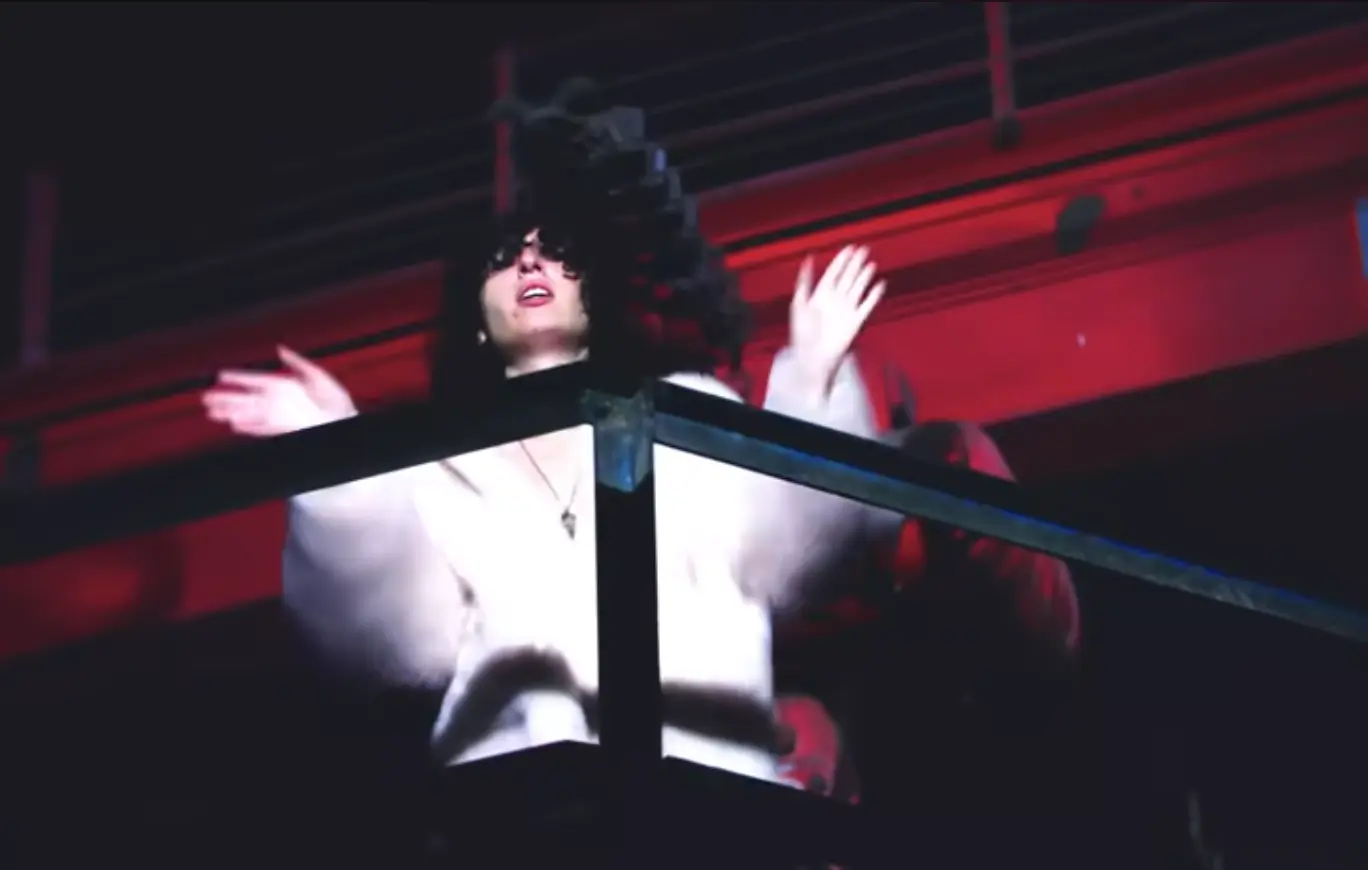
Screenshot of visualizer for
Image from the official visualizer for "20 Min" by Lil Uzi Vert (2017)

When MTV launched in 1981, it was the calm before the storm of the music video era. Fast forward to 1984, the legacy music channel held its inaugural Video Music Awards (VMAs). Among the winners was Michael Jackson for “Thriller.” The iconic music video is highly acclaimed by MTV, VH1, TIME, and the Library of Congress, and is one of the most popular music videos of all time. The 13-minute music video’s revolutionary impact was a huge wake-up call for artists about how quality visuals could propel their career trajectories.

The disruption resulted in artists and their teams bringing their A-game to viewers’ TV screens with the help of hefty music video budgets. From MTV’s TRL to BET’s 106 & Park, music videos were placed on a high pedestal and widely celebrated. However, as less revenue and digital streaming have greatly shifted the music industry, there has been a visible decline in the quality and effort towards music videos.

As music video premiere events have become way less of a trend, viewers aren’t as engaged as they were from the 1980s to the 2010s. In April 2024, The Guardian reported on the correlation between the decline in active viewership resulting in lower music video budgets. Photographer Olivia Rose shared with the outlet that while around $30,000 could be enough for a quality music video in earlier times, now, the money would go toward three visualizers for three songs instead. 

Visualizers range in style: looped video clips, series of clips limited to one or a few backdrops, and animation are popular approaches that are taken. The massive trend of artists posting fewer official videos and more official visualizers spiked during the COVID-19 pandemic. During a time when everyone was on lockdown, artists and their teams had to put their creative hats on. Moreover, similar to other industries, the music industry took a big financial hit leaving less money to create elaborate visuals and spawning more visualizers. 

Screenshot of visualizer for "WILDFLOWER" by Billie Eilish in an article about visualizers published by ATC Sound
Official visualizer for “WILDFLOWER” from the Billie Eilish album HIT ME HARD AND SOFT (2024)
Clip of official visualizer for “Let’s Go (Remix)” by Key Glock posthumously featuring Young Dolph (2024)

The transition to more visualizers comes at a suitable time with the rise in artists landing breakout singles through TikTok. The social media app has been tied to dwindling attention spans

While visualizers have served as a saving grace for indie artists who may not have the funding yet to create full-blown music videos, even global mainstream artists such as Drake, Tems, and Tyla have also been tapping into the trend. 

For those who may question why artists of such status would be fond of releasing official visualizers, “time is money” is the reasoning. Instead of big artists and their teams taking weeks to both film and edit music videos, they can opt for a less intricate process and put more time and creative energy toward the studio or preparing for live performances, their bread and butter. It’s also a way to pump out numerous visuals at a time to coincide with album rollouts. Along with official visualizers, lyric visualizers and official performance videos are additional newer ways artists keep fans engaged with their music. Since the days of the pandemic, artists have been laser focused on the power of online engagement.

Despite the pros of visualizers such as lower costs, people question if visualizers have as much replay value as music videos. It’s a potential downside since it’s more likely for a fan to rewatch a music video with a compelling storyline and top-tier cinematography rather than a mundane loop. Also, does the plethora of visualizers contribute even more to the oversaturation of visuals? If so, this may decrease the likelihood of visualizers standing out and helping artists’ songs sell.

Whether or not visualizers have more pros or cons remains a question, but according to a report from Business Research Insights, the music visualizer market is expected to grow significantly over the next decade due to technological advances.

There is a group of music industry professionals who believe music videos are a necessity for those who want to have longevity in the game, but it’s clear that artists aren’t letting up on visualizers anytime soon.

AY Young Is Modeling Sustainability In The Music Industry Through Solar Battery-Powered Concerts

0
AY Young The Battery Tour poster 2023
(AY Young/YouTube)

AY Young’s career trajectory is the definition of creating the change you want to see.

In 2012, the Kansas City native was a contestant on FOX’s “The X Factor.” Following his time on the music competition show, he went on to open for artists such as Wyclef Jean, Wiz Khalifa, T-Pain, and Janelle Monae. However, AY Young found himself wanting to take a more innovative approach when it came to performing. 

Despite facing numerous rejections, he was adamant on being an outlet for change. Following his motto of “Use your passion to take an action” sparked The Battery Tour and became a method for him to reduce the carbon footprint of his music.

“I just kind of obsessed over how to do a concert anywhere and started storing energy in batteries and that’s how The Battery Tour was born,” AY Young told ABC7 San Francisco.

AY Young The Battery Tour Green Sports Alliance Summit 2024
AY Young performing at the Green Sports Alliance Summit in Los Angeles this past August

The outlet reported that AY Young made history as the first known artist to power their concerts using 100 percent renewable energy. According to AY Young, he uses solar energy and stores it into portable solar batteries as opposed to diesel generators, which produce carbon emissions. Specifically, he converts direct current (DC) to alternating current (AC) and plugs in to power his shows. He has reportedly had over 950 shows under “The Battery Tour.”

Utilizing renewable energy is AY Young’s way of modeling what sustainability can look like within the music industry. Similar to him, musicians like Billie Eilish — who used solar-charged intelligent batteries for her 2023 Lollapalooza set — have been outspoken about doing their part to combat the climate crisis. Ultimately, the mission is to decarbonize the music industry. According to Billboard, the swift solution would be to no longer power event sites with diesel generators, but legacy rental companies don’t have infrastructure that’s sustainable enough yet. 

While AY Young is a leader in the movement, it’s evident that there is still a long road ahead in becoming a carbon-free industry. Nonetheless, a main action step of his is using The Battery Tour to promote, develop, and deploy sustainable solutions and connect with organizations that do the work. In addition to the concert series, AY Young created his album Project 17 that has secured sponsors including Samsung, Verizon, and Enel Green Power. As AY Young was previously recognized by the UN’s Office of the Secretary-General’s Envoy on Youth, the music project highlights the United Nations’ 17 Sustainable Development Goals (SDGs). According to the UN’s website, the SDGs went into effect in 2015 and the mission is for each of them to be completed by 2030.

“Today, the Division for Sustainable Development Goals (DSDG) in the United Nations Department of Economic and Social Affairs (UNDESA) provides substantive support and capacity-building for the SDGs and their related thematic issues, including water, energy, climate, oceans, urbanization, transport, science and technology, the Global Sustainable Development Report (GSDR), partnerships and Small Island Developing States,” its website wrote.

Through Project 17, AY Young is using his music platform as a conduit to his overarching goal of ensuring that more communities have access to electricity by 2030 alongside the UN. 

“We should all have energy, goal seven [affordable and clean energy], which is what I’ve been helping do with The Battery Tour doing these concerts, but I use the concerts to raise money to send people energy boxes, food, and water around the world who don’t have it,” AY Young explained to ABC7 San Francisco.

Prior to becoming an artist, AY Young grew up watching his father enact change in communities within their hometown of Kansas City including community efforts like neighborhood clean ups. Now, AY Young aims to expand on that impact through his music and mobilizing communities on a global scale.

“At The Battery Tour, we believe the future is renewable energy,” AY Young expressed during “The Artist-Activist Spectrum” panel at the inaugural Music Sustainability Summit in February 2024. “It’s sustainability. It’s reusing and refilling…I’m continuing to use music as a vehicle to bring together every facet of humanity to make sustainability happen.”

“Metal and Asphalt”: Zander, an American Is A Concrete-Bred Nerd

0
Rapper Zander, an American posing in a squat near the bottom of a pile of scrap metal in Minneapolis, MN as the cover art for his 2024 single

The richest of humans don’t live near a street.

Between them and the daily American rat race is often some combination of physical barriers including gates, land, water, air space (i.e. top-floor penthouses), and secluded neighborhoods with “Court,” “Circle,” and “Terrace” in their addresses instead of “Street” or “Avenue.”

That isn’t to say all streets and avenues are equally rough. But there’s a very broad distinction to be made among urban Americans between people who take a step outside their residence and are immediately in public and those who take a step outside and are still at the crib.

I’m not hard. I’m resilient, but not a “tough guy.” One is a character trait, the other is a character.

I used to throw sets up in my room envious of the intense camaraderie gangs provided, but was always secure enough to walk around by myself at school and in my community.

It pained me to not be like the boys who I called my neighbors in Saint Paul’s North End. I still chose to not be like them.

It pained me to see none of my neighbors in my honors classes. I still chose not to be like them. I also chose not to be like my Mac-Grove area academic peers.

The middle ground was full of doubt and promise: a brilliant kid surviving everyone else’s realities who knows he can build his own. Wouldn’t have taken as long to become himself if he stopped playing nice while everyone played pretend, but is that even true? What could have made him more self-aware than alone time and gravel pressed into fresh wounds? Aware that he’s different, aware that he’s mortal, aware that he always had himself.

“Metal and Asphalt” by Zander, an American Can Be Listened To Anywhere They Pay Artists Poorly (Everywhere)

Learn more about Zander by visiting his artist page.

UPDATE 10/7/2024: Edited for verb tense (“The middle ground was…” instead of “is”)