2026 is a big year for Mitski. The late February release of Nothing’s About to Happen to Me, her second US Top 10 release, cemented her place in the American mainstream, while the 10-year anniversary of Puberty 2, her breakout LP (or at least in the indie sense of the word) further zeroed in on her generational quality in the American rock canon, thanks in large part to its soaring, anthemic lead single “Your Best American Girl.”
“Your Best American Girl” was birthed to the world in 2016, the same year as Ocean Vuong’s debut poetry collection Night Sky with Exit Wounds and Andrew Ahn’s directorial debut Spa Night, three works of art that signaled the arrival of Asian-American auteurs in a landscape that was becoming more open and inclusive than it had ever been.
More importantly, they were in conversation with one another, evoking a discourse that had been largely sidelined or even treated like a taboo: the reckoning of Asian-Americans as an emerging creative force. Particularly the second generation and mixed-race millennials with ample storytelling chops and laser-focused visions who were born in tandem with and as a result of America’s Black-White dichotomy, their respective cultures of origin, and the tension between these disparate entities in American life.
Who Does Mitski Belong To?
It’s succinctly encapsulated in “Girl”’s soaring, gut-punching hook: “Your mother wouldn’t approve of how my mother raised me / But I do / I think do” (which she then doubles down by the second time the hook hits with an assured “I finally do”).
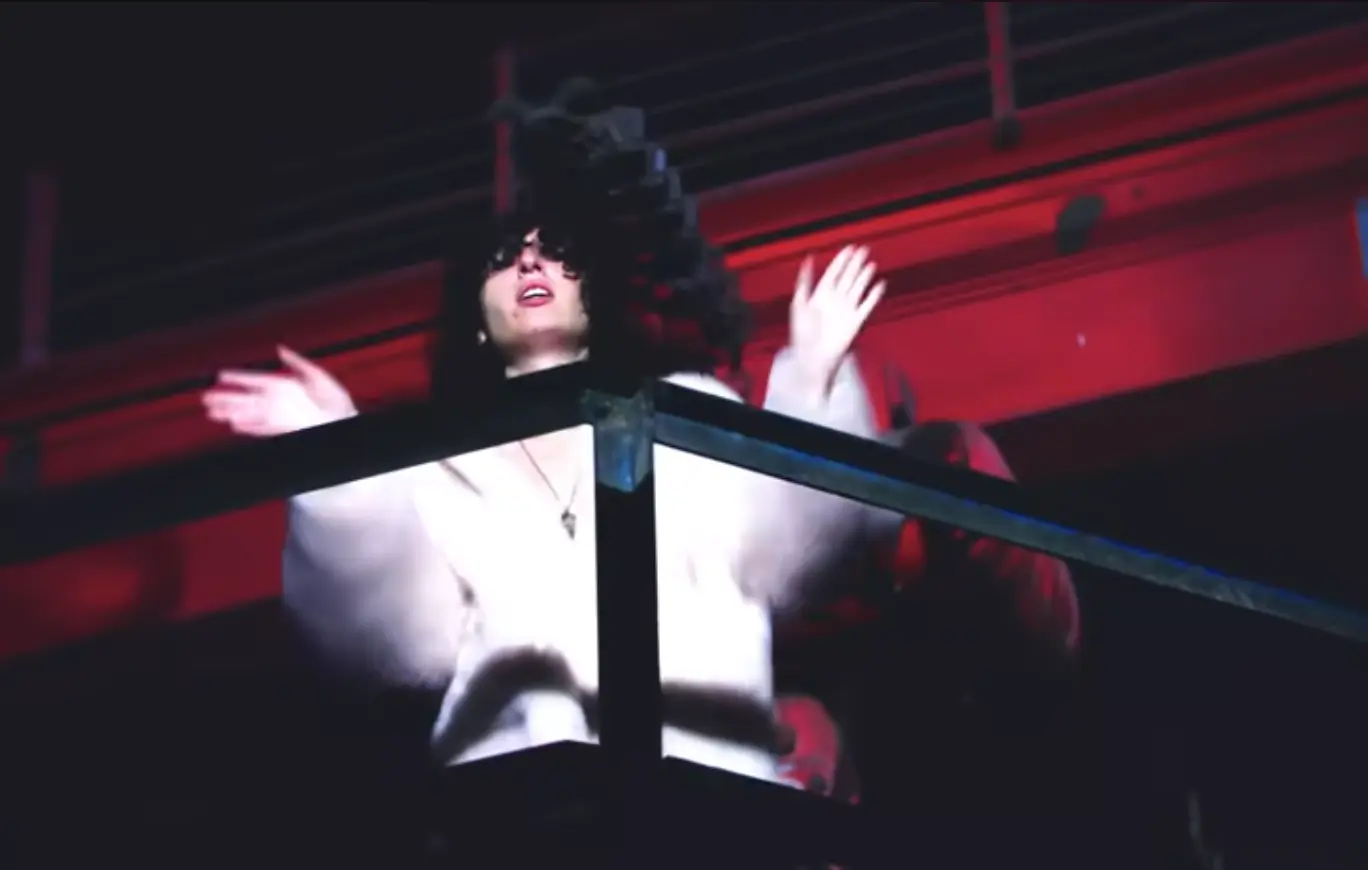
Cursorily, these lyrics may read as a pick-me plea for some White guy’s attention and affection — the music video more vividly describes the scenario — but with the passing of time, and my lived-in experience and observation now as a queer Asian immigrant in America, it points to a deeper desire: for a sense of belonging.
This stood in parallel with “Trevor,” Vuong’s standalone poem also from the same time frame, in which the titular character, described as “brunette but blond-dusted-arms man,” is similar to the All-American (White) boy of Mitski’s dreams. In the highly evocative and emotive piece, Trevor sneaks out to meet Vuong (“yellow & nearly nothing” goes Vuong’s description of himself), for whom Vuong is “a hurt he can’t refuse because that’s something, baby. That’s real. / & you wanted to be real, to be swallowed by what drowns you only to surface, brimming at the mouth / Which is kissing / Which is nothing … if you forget.”
So much has been waxed poetic on Asians as the model minority and their quote-unquote proximity to Whiteness. In Mitski’s case, there is real proximity at hand; she’s half-White after all. But as is the case with a great number of mixed kids, belonging is a tricky, touchy subject.
“Whiteness, for all its complications, carries a kind of portability. I envy the way it moves across borders effortlessly with built-in explanations,” wrote the Vietnamese-American writer Melanie Nguyen in her poignant essay. “A White person in an Asian country is foreign in an obvious, uncomplicated way. The gap between who they are and where they are is so painstakingly apparent that any effort feels admirable.”
Ten years earlier, Mitski expressed a similar sentiment, “Most public people who aren’t White feel this pressure and are asked to represent everybody. […] I have to go out and consciously say, ‘I’m a person, I can’t be a role model, I’m not a representative of anything.’ I have to consciously go out and do that, or else it’s gonna be put upon me.”
Maybe it’s this level of tact and self-awareness that has buttressed Mitski’s career thus far. By doing away with the constraints and trappings of identity politics, Mitski has managed to carve out a career path that’s not only credible and respectable but also singular — anyone operating in indie rock and the streaming era, let alone as Asian-American and female, would kill to have a fraction of Mitski’s sustained critical and commercial success.
Although the music critic Courtney Smith once noted how the lack of privacy for anyone with even a modicum of celebrity today “makes it challenging to create a sense of mystique, much less separate your private life from your public life,” Mitski’s commercial success fascinatingly did not begin to flourish until she became a recluse of sorts, having forgone social media engagement since 2019, not long after 2018’s Grammy-nominated Be the Cowboy further catapulted her to the mainstream.
Aside from producing three back-to-back US Top 20 albums in the 2020s, one of which produced a global smash in the form of “My Love Mine All Mine,” she has also added “Academy Award nominee” to her ever-expanding list of accolades since our last publication of hers. She opted out of performing at the ceremony.
“I’m not here, I’m where nobody can reach”
The act of disappearing seems to be Mitski’s go-to posturing as her star continues to reach new heights. It’s right there in Nothing’s “Instead of Here,” whose chorus is a simple, cutting “I’m not here / I’m where nobody can reach” after tinkering around with the idea of leaving just two tracks earlier (the skeletal “If I Leave,” which harks back to the lo-fi excellence of 2014’s Bury Me at Makeout Creek).
More pointedly, death is another recurring motif throughout the album, the allusion to which shows up across multiple tracks, most notably in the self-explanatory “Dead Women,” the throaty and driving “That White Cat” (“Mama, how ‘bout when I die? What do you hold on to?”), and the haunting drone of “Lightning,” which closes the album with a rumination on the afterlife. In it, Mitski posits an intriguing premise (“When I die, could I come back as the rain? / See the world again? / To fall again?”) over dead-alive drum beats, crescendoing guitar riffs, and trippy synth lines.
“Dead Women” is one of the most striking songs in Mitski’s discography, its lilting waltz burying the song’s seething anger. Taking the role of the deceased, she imagines someone — presumably a man — ransacking her possessions after murdering her and setting her dead body up for display. “She gave her life so we could have her in our dreams,” she pictures him saying. “She gave her life so we could fuck her as we please.” Paired with her own run-ins with eerie fan encounters, this admission is especially chilling.
“At the end of the day, I’m a woman in public, allowing myself to be consumed,” she concluded. “Even completely private citizens who are Asian women are more objectified, fetishized and expected to be submissive. There’s more of a feeling of ownership towards people of my identity, in general. My being in public has made that assumption more extreme.”
When bookended by the rousing guitar shreds of the set’s lead single “Where’s My Phone?” and the bossa nova-tinged “I’ll Change for You” (easily the prettiest, most tuneful cut in her oeuvre), however, Nothing’s About to Happen to Me is nothing short of a parting-of-the-waters moment in Mitski’s career, bringing together all the sonic elements of her previous releases — head-bashing, hard-hitting punk rock; ethereal, synth-heavy dream pop; lush, twangy Americana — while hinting at potential creative directions in the future. She covers the range and brings it home to a culture that is, by and large, still not accustomed to seeing women, more so Asian women, as “full, thinking humans” rather than mere “baby-making servants.”
It’s the sound of someone who knows who she is as a person — a woman — and what she is an artist, and more significantly, what she is capable of doing with said knowledge and mastery. It’s the sound of an artist who is well aware of the hard work she has put in over the course of her 20s and now in her 30s, flexing her artistic muscles with ease, expertise, and even elation, to an ever-increasing audience.
What is Asian-American Culture, Really?
Making up only around 7 percent of the American population, it is difficult, not to mention unfair, to lump all Asian-Americans — comprising over 20 origin groups, no less — into a single, monolithic entity.
The Collective vs. The Individual vs. The Artist
“To me, Asian-American culture mixes religion, emotional repression, classical music, video games, this yearning for identity, order, obedience, generational trauma, collectivism vs. individualism, and hierarchy,” astutely observed the culture writer Nathan Ramos-Park. This is fleshed out poetically in Spa Night, which culminates in David, its main protagonist, breaking out of his handed-down, tried-and-true routines after consummating his homosexual desire with a fellow Korean-American. For many Asian-Americans, often it’s these romantic and sexual encounters, whether with someone from or outside your own ethnic group, that serve as a catalyst for an awakening of the self, free from the communalist, conformist constraints of Asian culture at large (see also: Mira Nair’s Mississippi Masala or Desiree Akhavan’s Appropriate Behavior).
Then there’s the likes of Rucy Cui. Her short story “Hatchling” made rounds around the release date of Nothing’s About to Happen to Me … and not for good reasons. John Gu churned out possibly the most comprehensive, on-point analysis of the entire saga, which does raise the question: why is that, specifically in the literary world but also on TV and film, there are recurring patterns of Asian-American stories (or writers, for that matter) that get published and championed?
“The Asian-American subject is a hollow man and a hollow woman and it is for this reason that the Asian-American writer is a hollow artist,” critiques the novelist ARX-Han. “At the level of the artist, there is no core, no substrate, no energetic foundation for the Asian-American artist to draw from. His or her art rolls down, passively, to the level of the PMC-slop as a result. Real fire is nowhere to be found. We are living in an era of the complete annihilation of any semblance of belief. What good are our eyes if they are always closed?”
There is definitely some truth in Han’s snappy assessment; after all, this was exactly the premise of my NIKI and Rich Brian piece. “If there seems to be hyperfocus on interpersonal relationships in contemporary Asian American cultural works, it reflects the priorities of the established Asian-American culture class,” wrote Chris Jesu Lee. “With so many writers, filmmakers, and other artists coming from well-to-do upbringings […] or aspiring to its values, their primary racial conflicts involve assimilation anxieties at a personal level.”
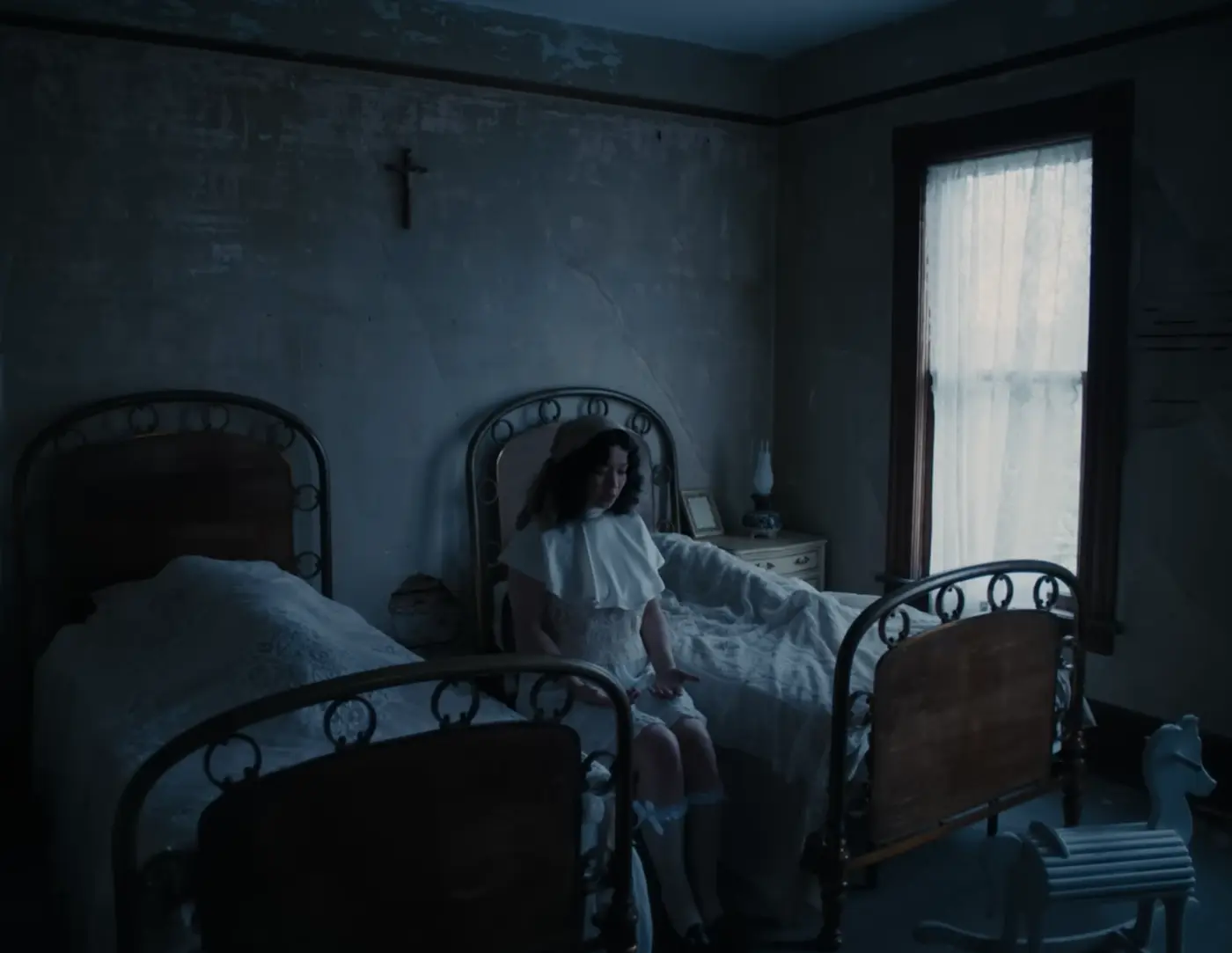
To circle it back to Mitski, while this was the very gist of “Your Best American Girl,” in the space of a decade, her references and sources of inspiration have gone beyond this played-out Asian-American cliché — in other words, she has indeed gone on, in the words of ARX-Han, to produce “something truly great, something truly unmoored from NPR slop and stinky-lunch slop and my-White-boyfriend slop and my-traditional-parents slop,” evidenced by how much of the aesthetic and promotional rollout for Nothing’s About to Happen to Me was heavily influenced by the horror/gothic writer Shirley Jackson, notably her novels The Haunting of Hill House and We Have Always Lived in the Castle.
In the process, and on her own terms, Mitski, in all of her existential musings as an Asian-American female indie rocker, is charting a path that’s uniquely hers and serves as a primary example for Asian-American creatives on how interrogating, excavating, and validating oneself as a minority is, in fact, a more interesting and ultimately rewarding pathway rather than endlessly pandering to — or worse, seeking validation from — a larger, more prevalent social group. It may not be a readily commodifiable selling point, but it is, as Mitski has proven repeatedly within the past decade, one that demands respect and ensures longevity. And isn’t that the ultimate goal of any creative?
***
In mid-July, Mitski held her second concert in Jakarta, her first in seven years. The shift was palpable: while her 2019 Jakarta show took place more or less in an underground venue, now it was at a full-blown stadium complete with bannered entrance and virtually ten times the number of attendees. (Full disclosure: I had previously attended her Brooklyn residency in March, my first Mitski gig since relocating to America). It was heart-rending to see her back in my place of origin essentially as a pop star, even more so in a relaxed and animated disposition, a far cry from her tense mien, intense butoh choreography, and very minimal audience interaction seven years prior.
Eight albums in, Mitski has entered the second decade of her music career with poise and prowess, a fascinating case study on how a sense of mystery and detachment, when paired with genuinely excellent material, makes the right recipe to lure the crowd in without fail. Where once she wryly likened herself to a “black hole where people can dump all their shit … whether it’s a need for love, or it’s hatred and anger,” it’s by rising above the designated role assigned to her and creating a mythology around her artistry rather than herself that she continues to chart a trajectory that’s hers, all hers.